

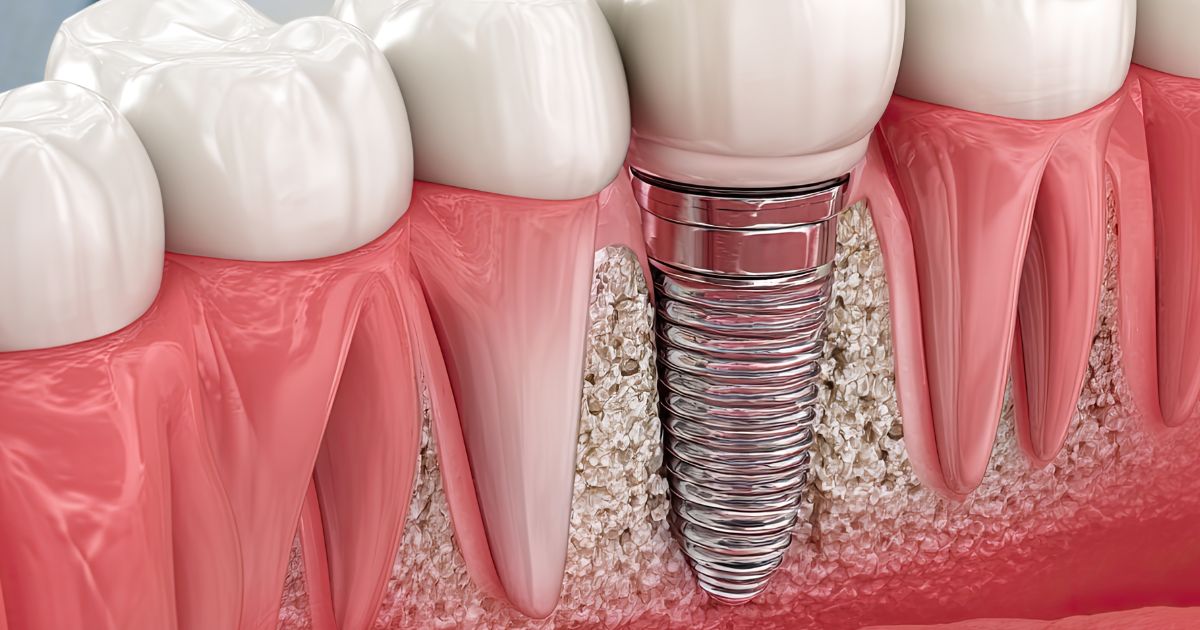
Dental implants have transformed the way missing teeth are replaced, offering stability and function similar to those of natural teeth. However, not every patient has enough jawbone to support traditional implants. For individuals with significant bone loss who may not want or qualify for extensive bone grafting, subperiosteal implants can provide an alternative solution. Understanding how these implants work and who may benefit from them is an important step in exploring restorative options.
What Are Subperiosteal Implants?
Subperiosteal implants are a type of dental implant that sits on top of the jawbone but beneath the gum tissue. Unlike traditional implants that are placed into the bone, subperiosteal implants rest over the bone and are supported by a custom metal framework. Posts attached to this framework extend through the gum tissue to hold crowns, bridges, or dentures in place.
With advances in digital imaging and 3D imaging design, these implants can now be precisely customized to match a patient’s jaw structure, improving fit and stability.
Who Is a Candidate for Subperiosteal Implants?
Subperiosteal implants are generally considered for patients with limited jawbone height or density. Bone loss may result from long-term tooth loss, periodontal disease, trauma, or aging. When the jawbone is too thin or weak to support traditional implants and bone grafting is not preferred, this option may be considered.
They may be appropriate for individuals seeking a more stable alternative to removable dentures, but who lack sufficient bone for conventional implant placement. A detailed evaluation is necessary to determine candidacy.
How Do Subperiosteal Implants Differ From Traditional Implants?
Traditional endosteal implants are placed directly into the jawbone and rely on osseointegration, a process in which the bone fuses with the implant. Subperiosteal implants, by contrast, rest on top of the bone and are secured beneath the gums with a custom-designed framework.
Because they do not require significant bone volume for insertion, subperiosteal implants may reduce the need for extensive grafting procedures in select cases.
What Is the Placement Process Like?
The process begins with advanced imaging to assess the jawbone and create a customized framework. During surgery, the gum tissue is lifted to position the framework over the bone. The gum is then sutured back in place, allowing support posts to extend through for the final restoration.
After healing, the permanent teeth or prosthetic device is attached to the posts, restoring appearance and chewing function.
What Are the Advantages of Subperiosteal Implants?
A primary advantage is that they offer a solution for patients with severe bone loss who may not wish to undergo bone grafting. Modern customization techniques can improve comfort and stability.
Patients who struggle with loose or uncomfortable dentures may find that subperiosteal implants provide greater support and confidence in daily activities such as eating and speaking.
Are There Risks or Limitations?
As with any surgical procedure, there are potential risks, including infection, swelling, and healing complications. Long-term success depends on proper fit, surgical technique, and ongoing oral hygiene.
Not every patient is a candidate. A comprehensive consultation helps determine whether subperiosteal implants or another treatment option is most appropriate.
South Jersey Oral Surgeons at Lanzi Burke Oral & Maxillofacial Surgeons Help Patients Explore Treatment Options
Subperiosteal implants provide an alternative for patients with limited jawbone who seek a stable, long-term tooth replacement option. Through careful evaluation and personalized treatment planning, the South Jersey oral surgeons at Lanzi Burke Oral & Maxillofacial Surgeons can help determine whether this innovative approach or another implant solution is right for your needs. Call us today at 856-582-4222 or fill out our online form for an initial consultation. With offices located in Washington Township, Haddonfield, and Woolwich Township, New Jersey, we proudly serve all patients of South Jersey.